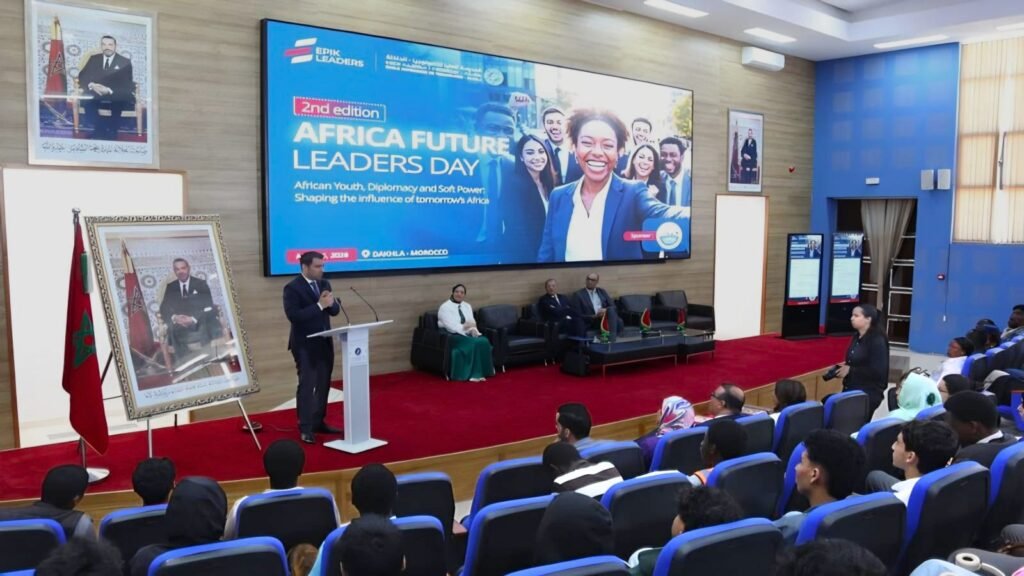
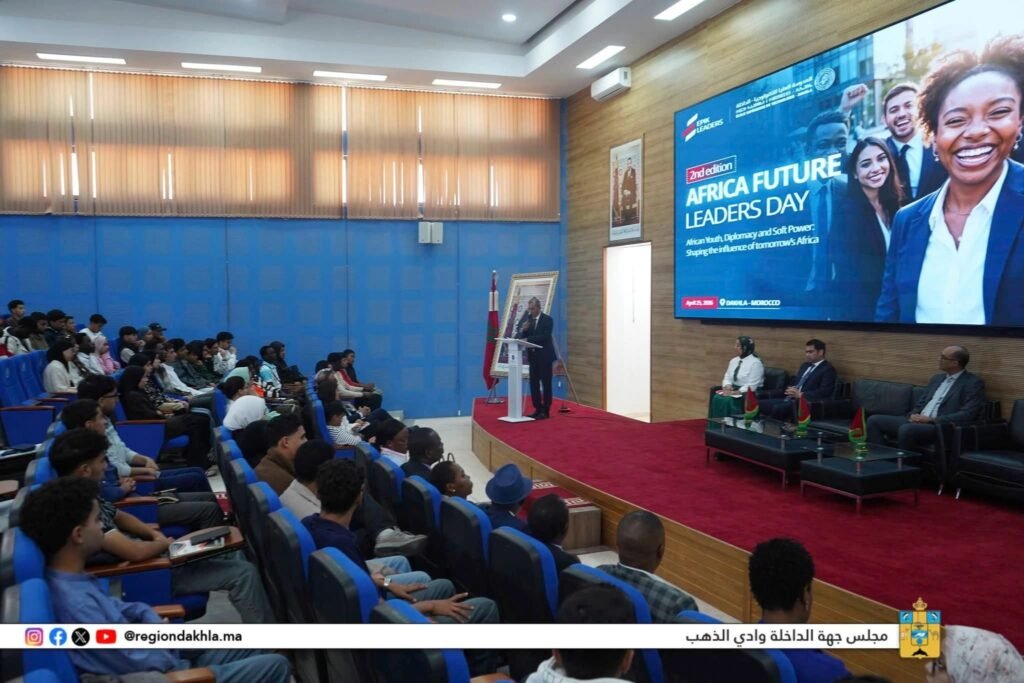
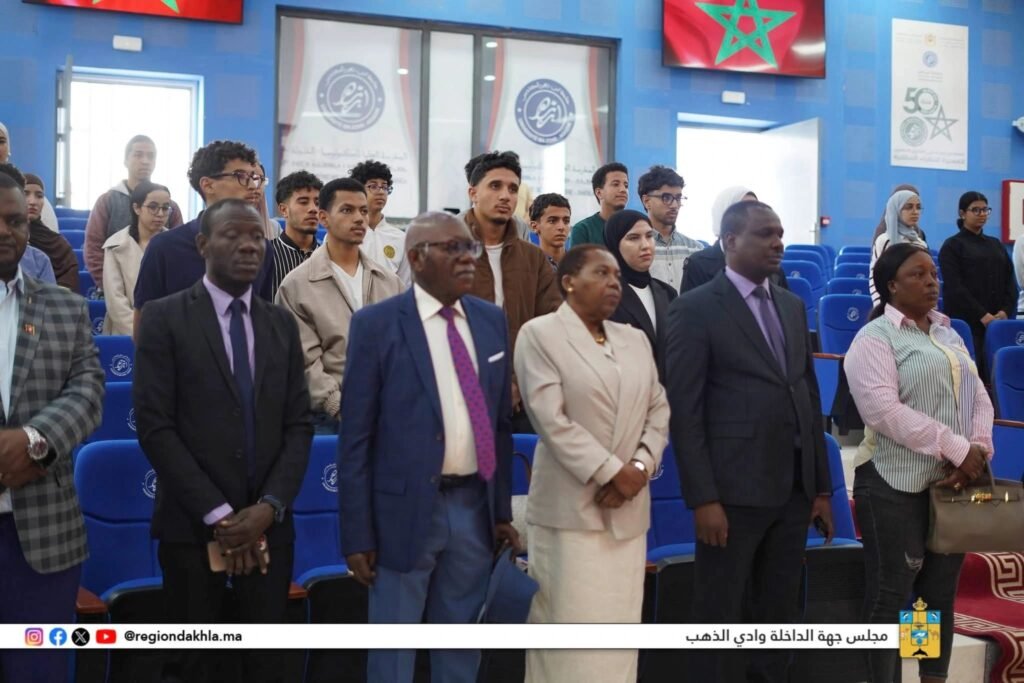
The Higher School of Technology (EST) of Dakhla, in partnership with Ibn Zohr University, hosted the 2nd edition of the Africa Future Leaders Day, organized by EPIK Leaders under the theme: « African youth, diplomacy and soft power: building Africa’s influence of tomorrow. » Held in the heart of a territory that has become a true diplomatic crossroads, the event brought together students, professors-researchers, diplomats, and institutional stakeholders, including the Vice President of the Dakhla-Oued Eddahab Regional Council, Mr. Moulay Boutal Lembarki.
Leadership through human skills
In his opening address, the President of the association, Mahmoud Cherkaoui, set the framework: « Training future leaders can no longer be limited to technical knowledge alone. While these remain essential, they must now be complemented by transversal skills marketing, communication, teamwork, international networking to meet the demands of today’s market. »
He emphasized that EPIK Leaders’ educational approach is built on three pillars: learning by doing, gamification, and networking, with the aim of transforming academic knowledge into field-ready expertise.
Africa at the center of global decision-making
The choice of Dakhla was not incidental. A geopolitical crossroads, a showcase of Morocco’s development in the Sahara, and a gateway to Sub-Saharan Africa, the city embodies the very dynamics of soft power and territorial diplomacy that framed this edition’s discussions.
For the Vice President of the Dakhla-Oued Eddahab Regional Council, Moulay Boutal Lembarki, Africa must move from the periphery to the center of global decision-making by relying on its youth, described as a « driving force »: « Influence now depends on culture, knowledge, and the ability to project a strong identity. »
EST Dakhla lecturers Meriem Sahli and Sahar Saoud highlighted the importance of parallel diplomacy in strengthening Morocco’s global influence by 2030, particularly through sport and culture also acknowledging the support provided by EPIK Leaders to the institution’s students.
A manifesto for narrative sovereignty: « The Awakening of the Sentinels »
The event also featured the presentation of a collective work titled: « The Awakening of the Sentinels: Crossed perspectives of African youth on Soft Power and New Diplomacy. » This essay gives voice to young leaders and students from several African countries around three strategic axes:
Territorial and proximity diplomacy: Through examples such as Dakhla and Kigali, the book explores how geographic spaces become instruments of influence.
Soft power and narrative reconquest: An analysis of the « battle of narratives » and the need for Africa to produce its own storytelling through culture and digital platforms.
Soft skills serving peace: A focus on empathy and collective intelligence as foundations of ethical leadership.
In the general introduction of the manifesto, Dr. Nizar Chaari, founder of EPIK Leaders, defines the ambition of this movement: « Being a Sentinel means accepting the responsibility of safeguarding a millennial heritage while building a technological and sovereign future. It means understanding that the true power of a continent is no longer measured only by its underground resources, but by its ability to attract, convince, and radiate. »
Launch of the EPIK Think Tank on African leadership
Finally, this edition marked the official launch of the EPIK Think Tank, a dedicated center for reflection on African leadership. This initiative extends the intellectual momentum of the event by structuring ongoing knowledge production on diplomacy, soft power, and governance issues driven by the continent’s youth.